
Why we’re going wild for bees at Belmont
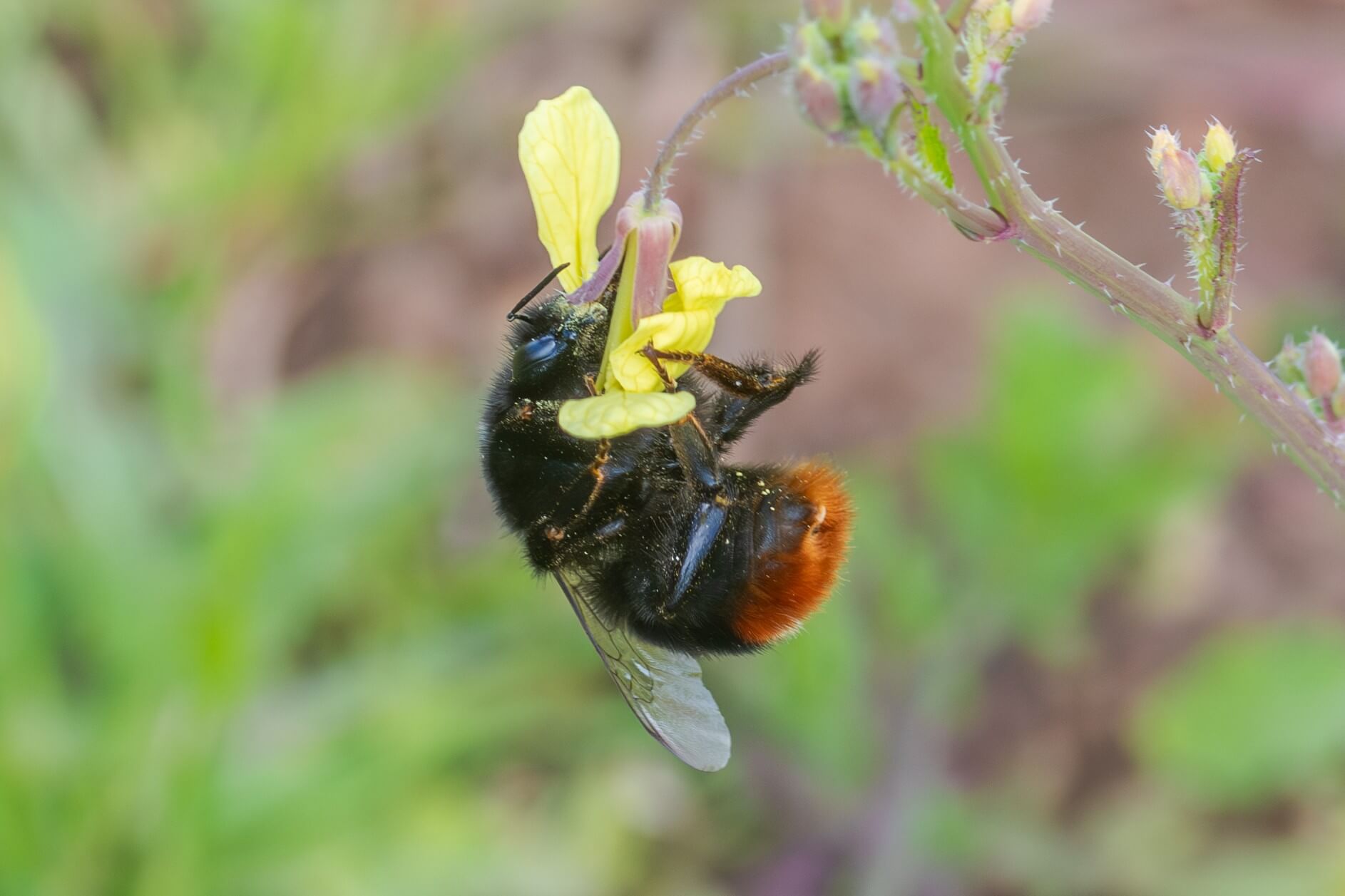
A lot of people don’t know this, but there are 270 species of bee in the UK. They hear the word “bee” and picture one thing, the honeybee, but that’s just one species out of 270. There are twenty-four species of bumblebee, and around 245 species of solitary bee. And then, sitting apart from all of them, the single honeybee: Apis mellifera. The one that builds the hexagonal wax, dances to communicate, and has been doing exactly this since the age of the dinosaurs.
This World Bee Day, we wanted to take you on a walk at Belmont Estate. A walk with Martin Williams, our Head of Nature Connection, passionate beekeeper, and the person most likely to crouch down in a cold field to watch a bee kick out a diseased hive-mate while explaining exactly why that’s remarkable!
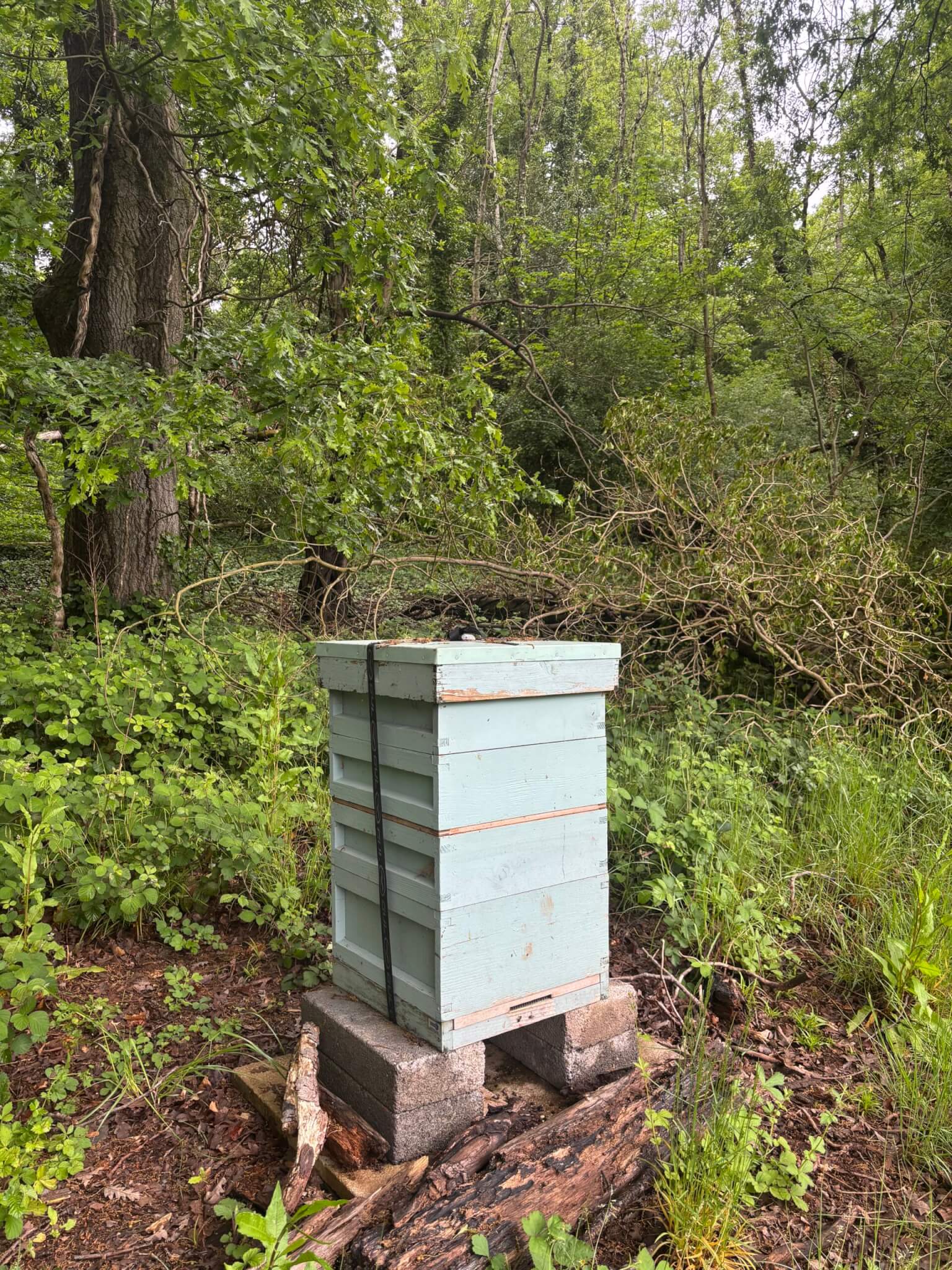
The hives at belmont
We currently have hives at Belmont, tucked into sheltered corners, south-facing, protected from cold winds, surrounded by ancient woodland that stretches out behind the old walls.
The location is, as Martin puts it, “fab.” And he’s right. The bees have access to a huge diversity of forage, tree pollen and wildflowers, the kind of varied, chemical-free landscape that’s becoming increasingly rare in the British countryside.
But even with these ‘perfect’ conditions, Martin explains that beekeeping is really hard right now. His beekeeping friends have lost their hives, his own hives at home didn’t make it through this winter and colonies that looked healthy in autumn just… weren’t there in spring or sadly, sometimes ended up being a hive full of dead bees. Sometimes the Marie Celeste – frames, wax, stores, but no bees at all.
Something is happening in the world of beekeeping, and nobody’s entirely sure what.
what’s going wrong
Pesticides are the obvious answer, and they’re certainly part of it. Bees will forage up to two miles from the hive which means even if your immediate land is clean, your bees are almost certainly visiting fields that have been treated. They come back, and they die. Or they’re detected as compromised by the guard bees, the sentries who stand at the hive entrance checking every returning bee, and they’re ejected.
Glyphosate is one Martin feels strongly about and quite rightly. Banned in the EU, it’s still used here, shockingly, including as a desiccant on cereal crops. Sprayed onto wheat and barley shortly before harvest, not to kill weeds, but just to dry the crop out faster. A chemical banned elsewhere for environmental harm, used on the food we eat, in the fields our bees forage.
Then there’s Varroa, a parasitic mite, originally from Asia, that has spread to honeybee populations across the world. Most hives have it, and conventional beekeeping practice is to treat it with chemicals, regularly, as standard. Without treatment, colonies can collapse.
And layered on top of all of this: climate change. This time of year in May should be warm, it should be 20-something degrees, the bees should be pouring in and out of the hives. Instead, on the May morning Martin walked us around, it was 9 degrees and most of the bees weren’t coming out of the hive at all as they don’t fly below 10 degrees. The swings between late cold snaps and early warm spells, the unpredictability of seasons all takes its toll on the bees.
So it’s probably not one thing that affecting them, but everything at once.
our approach is hands off
We’re approaching beekeeping a little differently at Belmont. Martin’s (and his wife’s, who’s the main beekeeper of the two) philosophy, developed over years of conventional beekeeping and gradually moving away from it is non-intervention. That means no chemicals for Varroa, no weekly frame inspections, no feeding with fondant sugar, no interference. This is, it’s worth saying, controversial in beekeeping circles.
Conventional beekeepers will tell you that not treating for Varroa is irresponsible, that you’re setting your colonies up to fail and that you’re potentially spreading disease to neighbouring hives.
We understand that, but in our view, increasingly shared by a growing movement within beekeeping, is that the industrial model of treating, managing, extracting, maximising is actually part of the problem. You can walk past commercial beekeeping operations with hundreds of hives, there are actually lorries that transport thousands of hives to different crops, release the bees to pollinate, then pack them up and drive to the next field. It’s farming intensively in the bee world.
What we’re trying to do at Belmont is give bees the best possible environment and then trust them to do their thing, and if that means the Queen bee leaving to find a new potential hive, then so be it.
the log hives
The other thing we’re building quite literally very soon, with chisels and a bit of elbow grease is wild log hives.
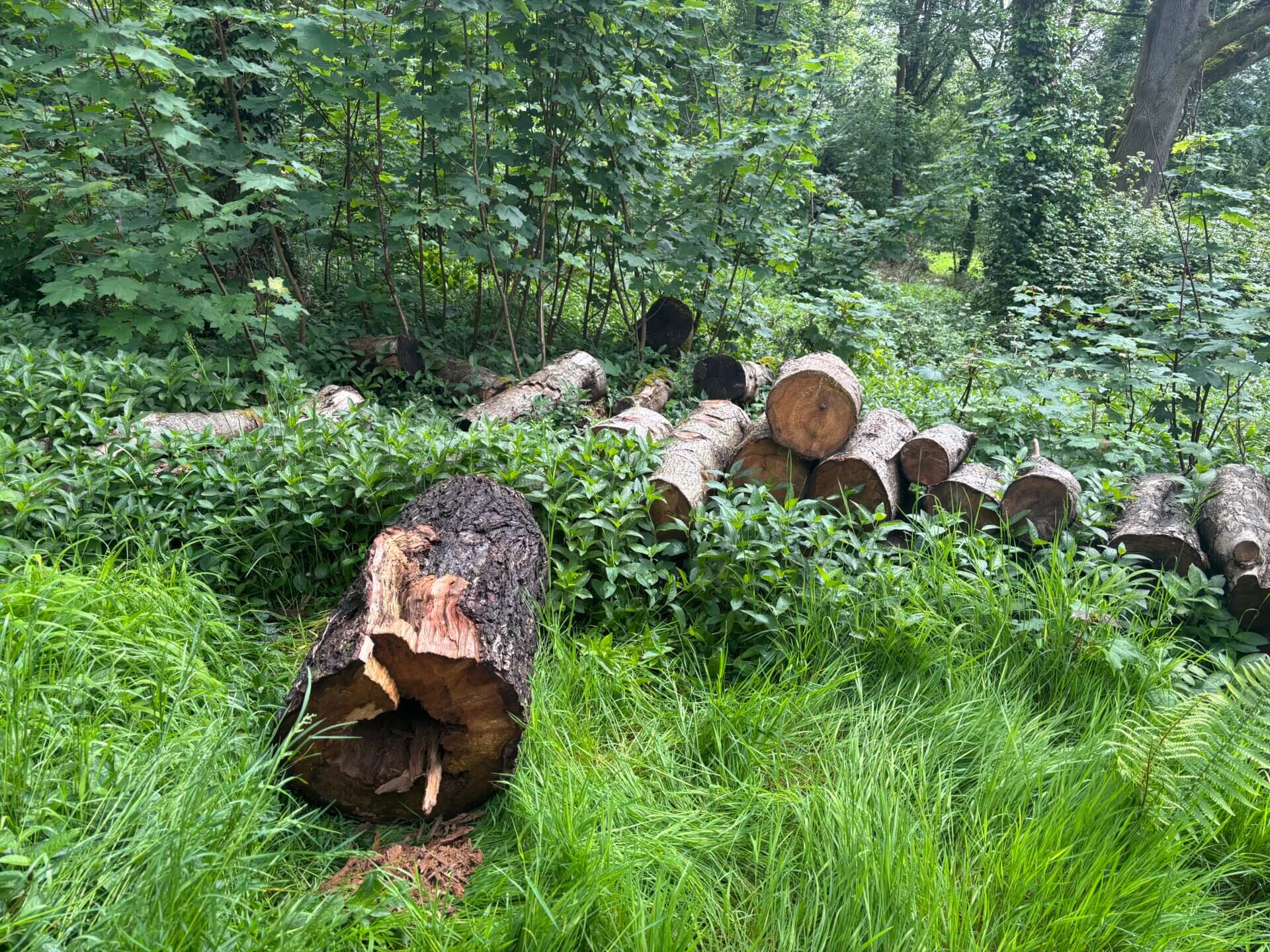
Honeybees in nature live in hollow trees, they find a cavity, move in, and build. They don’t need us to ‘look after them’, they’ve been doing it for themselves for millions of years. So Martin has been scavenging through what we call Firewood Alley, the stacked remnants of the 100s of trees cleared from Pear Drop meadow, an old walled pasture on the estate, looking for hollow logs of the right diameter.
He’s found a couple of good ones, so the plan is to hollow them out properly, cap both ends with a wooden block, drill a few small entrance holes, and either strap them to trees or build a simple frame to mount them on. You may have seen something similar, a tall, narrow hive on a post, sometimes called a rocket hive.
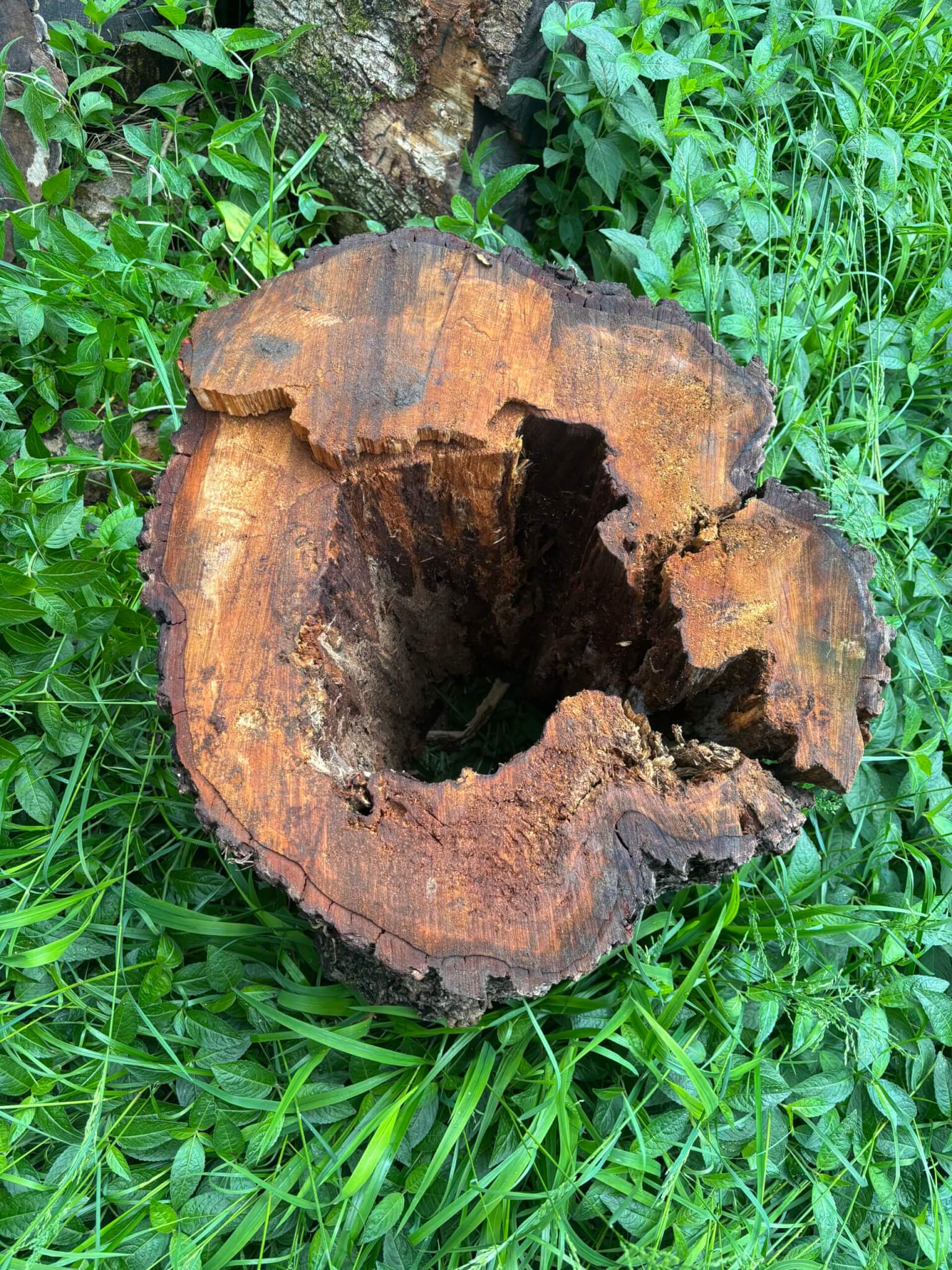
We’re not putting bees in the log hives, we’re just putting them out, in good spots, and seeing what happens. If a scout finds it, likes it, and brings the colony, brilliant. If not, the log becomes habitat anyway: a beetle hotel, a nesting site, part of the living infrastructure of the estate.
bees at watercress farm
Belmont’s sister site, Watercress Farm, is our rewilding project in progress and while we’re not keeping bees there, we are paying very close attention to the ones already using it.
Since 2024, volunteers have been running regular bee surveys across the site. Forty-three species recorded across 18 surveys so far, with transects covering the Poplar Wood and wetland area, and a brand new one started this year over the emerging Flower Meadow. That’s roughly 15% of all bee species found in the UK, turning up on one rewilding site.
The list is a brilliant illustration of just how many different kinds of bee most of us walk past without noticing. Alongside the familiar bumblebees, of which there are seven species recorded, the surveys have turned up 14 species of mining bee, quietly excavating tiny tunnels in bare earth to lay their eggs. Six species of nomad bee, which are cuckoo bees: they don’t build their own nests, they sneak into mining bee burrows and lay their eggs alongside the host’s. There’s a blood bee, the rather dramatically named Sphecodes, which does the same thing. A scissor-bee, a yellow-face bee, two species of flower bee, two species of Colletes and seven species of furrow bee. And, almost incidentally, one honeybee.
The point is that the honeybee, the one everyone thinks of, is a tiny fraction of the story. The overwhelming majority of bee species are solitary, ground-nesting, and completely invisible to most of us. They don’t make honey in quantities you’d notice, they don’t live in hives and they don’t swarm. They just get on with pollinating, year after year, in the margins of fields and the cracks in old walls and the south-facing patches of bare soil that most people would look at and see nothing.
the bigger picture
Bees have been around since before the dinosaurs disappeared, they have survived ice ages, mass extinctions, continental drift. The hexagonal cell they build, the most structurally efficient shape in nature for storing and insulating is identical whether you’re in Canada or Australia or a Somerset field. That shape is in them, it always has been.
Yet right now, in 2026, their populations are crashing. The pollinators that underpin our food system are in serious trouble. Not because of one thing, but because of the accumulation of everything modern agriculture has thrown at the landscape over the past 70 years.
Roughly a third of the food we eat depends on pollination. Fruit, vegetables, nuts, seeds – most of it needs a bee to get from flower to harvest. Without pollinators, our diets don’t just get worse, they collapse into a much shorter, much bleaker list of wind-pollinated staples: wheat, rice, corn.
The connection to climate change runs both ways, bees are essential to the health of wild plant ecosystems, which in turn are some of our most important carbon stores. Healthy wildflower meadows, diverse woodland understories, functioning wetland margins, all of them depend on pollinators to reproduce and spread. If we lose the bees, you start to unravel the ecosystems that are doing quiet, unglamorous work sequestering carbon and stabilising the climate. The collapse of one accelerates the collapse of the other.
At the same time, the climate is making things harder for bees with the unpredictable springs, the cold snaps in May, the swings between drought and flood, bees evolved over millions of years to track seasonal rhythms that are now shifting faster than they can adapt. A colony that survives a hard winter only to emerge into a late cold snap with nothing yet flowering can starve within days.
It’s a tightening spiral and the way out of it isn’t complicated, even if it’s not easy. It’s the land, it’s the decision made farm by farm, estate by estate, garden by garden to manage it differently. To leave some bare soil, to not spray, to let the field margins go, to stop seeing the untidy edges as a problem.
Places like Belmont, with our commitment to rewilding, to chemical-free land management, to making room for the things that were here before us really matter.
Happy World Bee Day. Go and stand near something flowering for a minute and watch what turns up.
If you’re keen to learn more about bees, we’re hosting a talk, walk through our rewilding site, and film screening with Martin Dohrn filmmaker behind the wonderful film ‘My Garden of a Thousand Bees’ get your ticket here.