heavy pigging as a woodland creation tool
Written by Eric Heath, Head of Natural Capital and Ecology at Belmont.
I love trees. My early joy at climbing them is probably one of the reasons I do the job I do. This love of trees has remained a constant in my career, and at Belmont we have a glorious array of trees, hedgerows and woodlands to keep me engaged with these wonderous plants.
Having undertaken ecological surveys across the UK for many years, I still remain largely unconvinced by conventional tree planting as a woodland creation method. Establishment rates are frequently poor, and where trees do survive, the habitat that develops often lacks the structural and species diversity characteristic of semi-natural woodland, instead looking like what it is, a collection of trees planted in a field.
At Watercress Farm, Belmont’s nature recovery site in North Somerset, we have a range of habitats developing including wet woodlands. We’ve also been exploring alternative approaches informed by the site’s grazing infrastructure. The farm carries free-roaming Devon Red cattle, seasonally introduced Exmoor ponies, and Iron Age and Tamworth pigs, all of which function as ecosystem engineers across different parts of the site. We can control where these animals go to reduce grazing and browsing pressure on areas where we would like woodland and scrub to develop. We also have resident deer and hares amongst other wild animals, that we obviously have very little control of where they go and what they nibble!
After a few years of our nature recovery work at Watercress it was clear that wet woodland would not be establishing in the modified grassland habitats along the banks of the Land Yeo that we had proposed and a more active intervention was required. The Land Yeo here is fringed with mature alder and willow so there is a plentiful seed source and we know from the nearby arable field that wet woodland establishes quickly if given the chance. So, in discussion with Belmont’s Estate Manager, Luke Price, we decided to trial ‘heavy pigging’ as a targeted disturbance intervention.
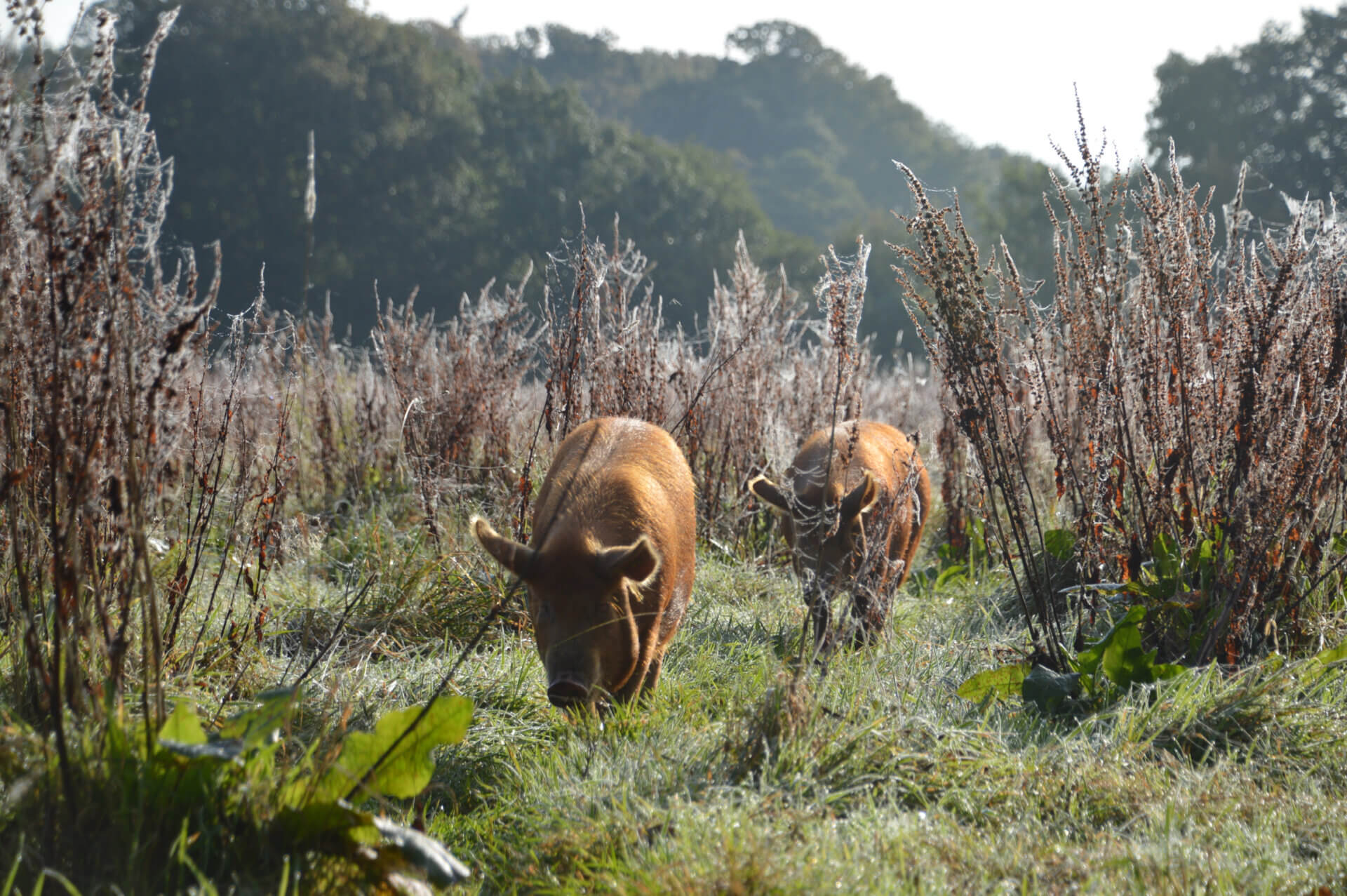
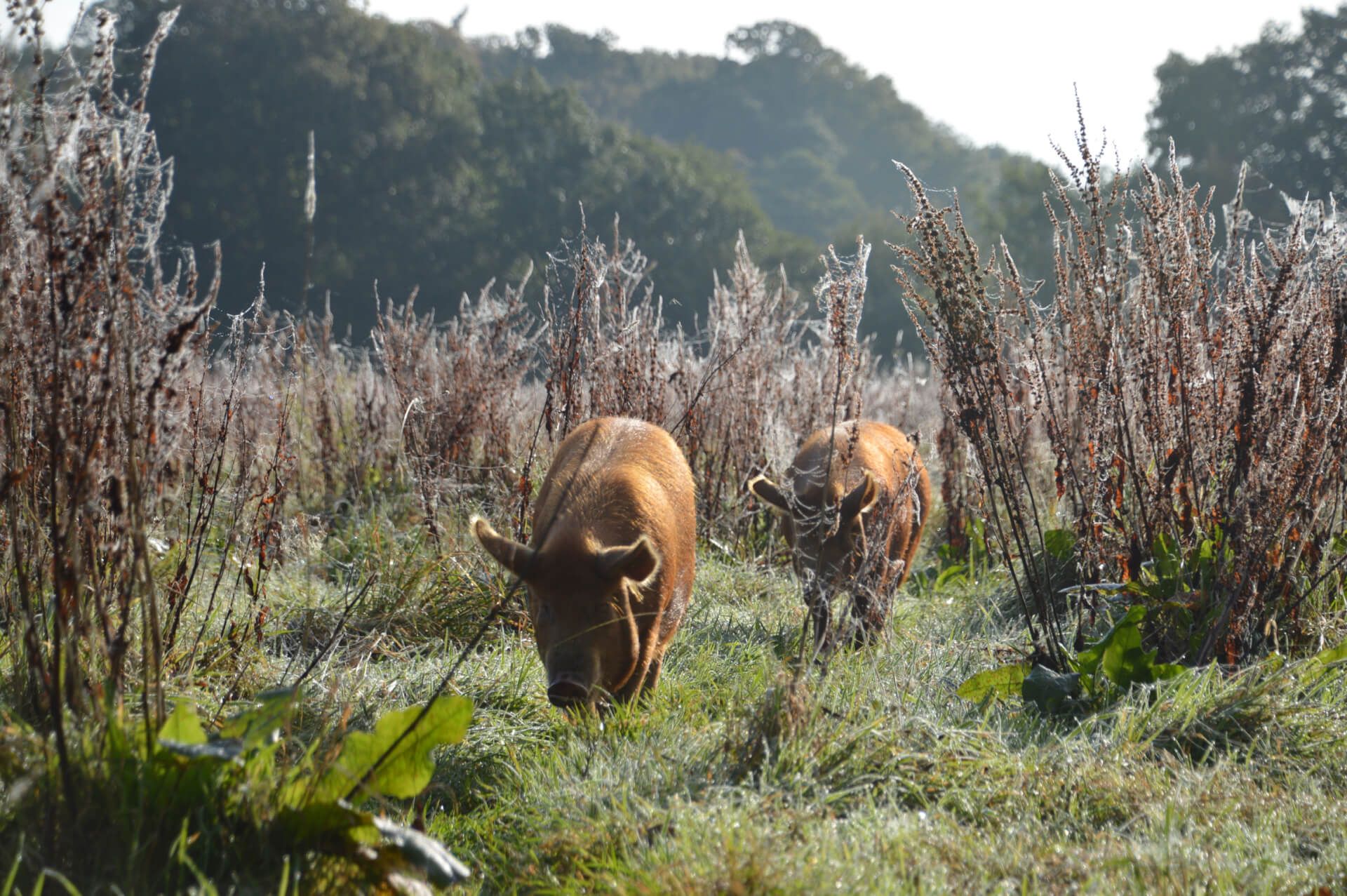
The target area (5 acres) was divided into two roughly equal plots with temporary electric fencing to hold the pigs there, rather than letting them wander the whole site. Six Tamworth pigs were introduced to Plot 1 in October 2025 but flooding in late December meant we had to move them, they were reintroduced to Plot 2 in January 2026 and remained there until end of March.
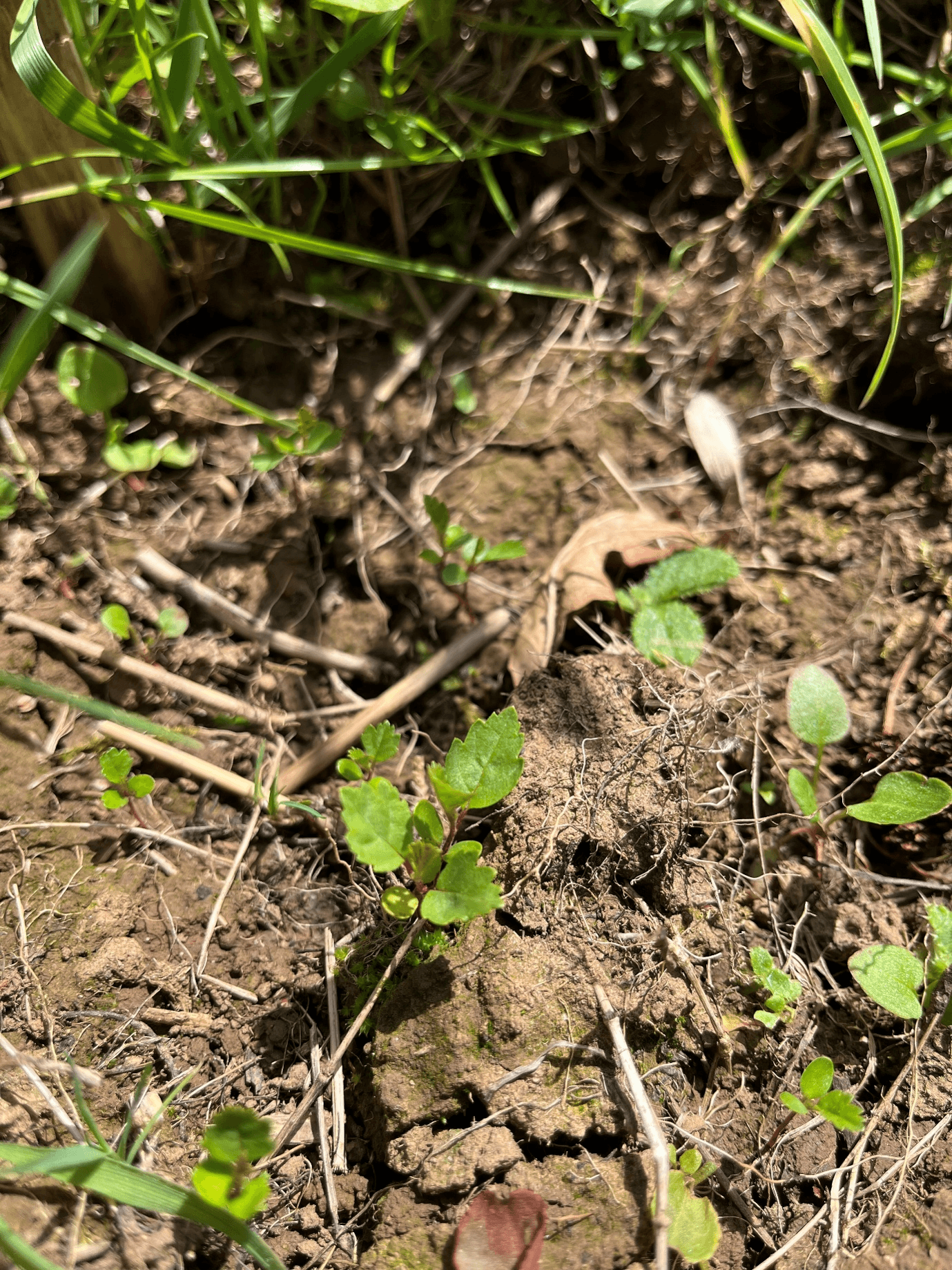
Early vegetation monitoring (ongoing, with full surveys planned for early summer) suggests the intervention has been effective in disrupting the grassland matrix. Bare ground creation in the sward appears to be facilitating germination, with what we’re cautiously identifying as alder cotyledons appearing across both plots. There has also been a notable increase in forb cover, particularly bird’s-foot trefoil and meadowsweet, consistent with disturbance releasing the buried seed bank.
Full survey data will follow, but the early indications are that heavy pigging warrants serious consideration as a low-infrastructure, ecologically coherent alternative to conventional tree planting in riparian contexts where seed source is not a limiting factor.
Want to come and see what we’re up to? We run regular guided walks of our nature recovery site. If you’re a developer or an ecologist, sign up for a BNG walk here.