


A meadow, one year in
One of Watercress Farm’s more ambitious nature regeneration projects is the creation of 4.2 ha of species-rich Lowland Meadow on ex-arable land. Along with several other arable fields, the area has been left fallow for four years to allow the land to rest and recover, and had recently been taken into rewilding management, with the reintroduction of free roaming livestock. Over that time, it seems the fertility has declined somewhat and a rough grassland with abundant Yorkshire Fog grass has developed, with pioneer wildflowers such as the dandelion-like Common Cat’s-ear starting to appear, along with some developing bramble and goat willow scrub.
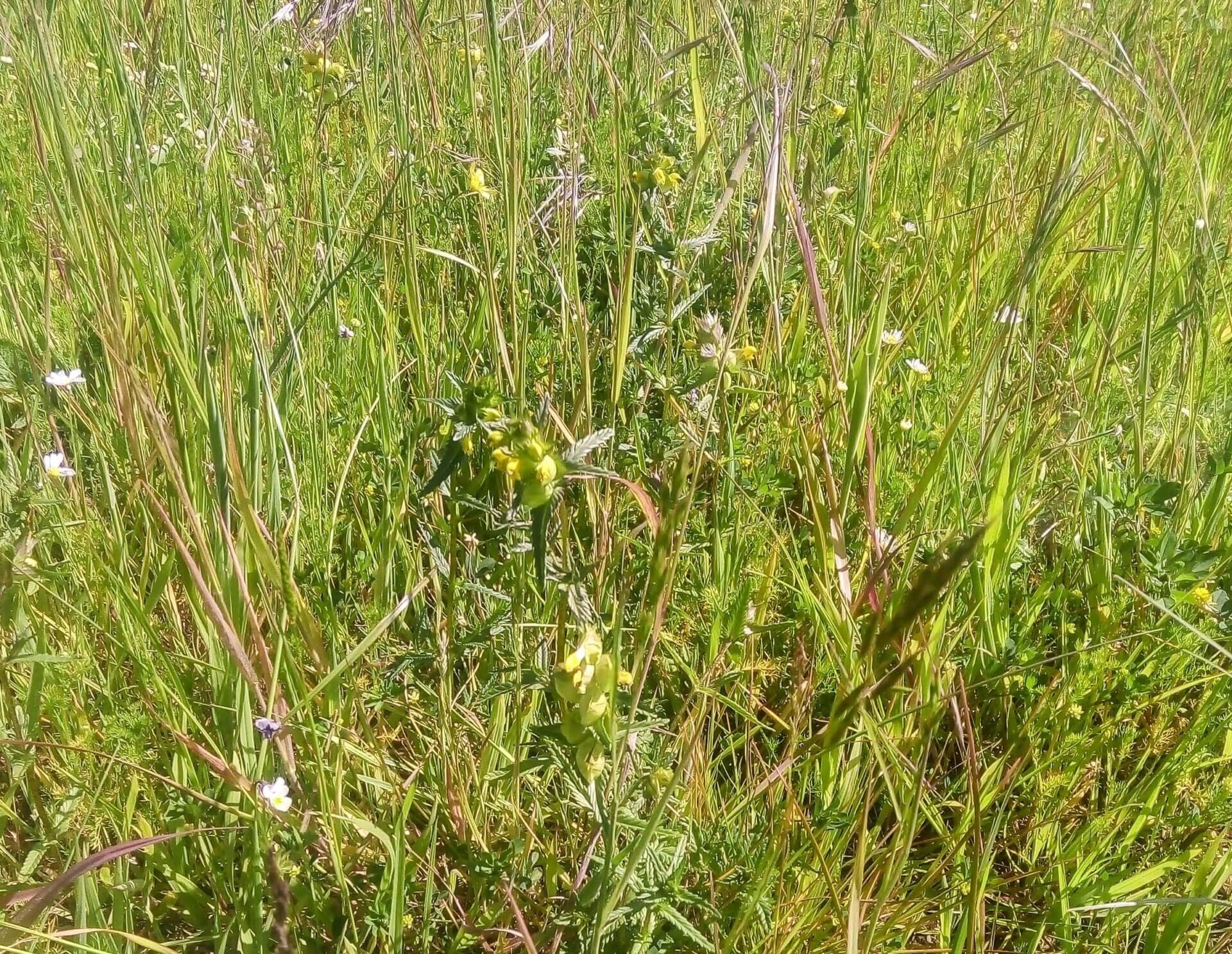
From there it was all change last Autumn when the project area was fenced off and the vegetation mowed off and cleared. Half the area was then lightly ploughed and the other half disc harrowed before seed harvested from Avon Wildlife Trust’s Folly Farm reserve nine miles away was introduced. Folly Farm’s wildflower meadows have themselves been steadily restoring since the 1980s and are now a donor site for wildflower meadow seed with a wide range of local neutral grassland species appropriate for our site. The mixture included plenty of Yellow Rattle, a hemi-parasitic wildflower known as the ‘meadow maker’ for its ability to keep grass growth in check and help slower-growing wildflowers establish The two different preparation treatments were used as an experiment to see which technique would be most effective for the establishment of this wildflower mix.

For the next six months we watched as a warm autumn brought a flush of arable weeds, including diminutive field pansies and mayweeds, and the grasses began to show. By the end of the winter Wild Radish had invaded the ploughed section, with much of the rest of the ground still bare and no sign that any species-rich grassland was ever going to grow at all. However at the same time beautiful, delicate common fumitory plants, previously unseen at the rewilding site, also popped up. In early Spring a few Exmoor Horn sheep were introduced to slow the emerging grass and the weeds. They helpfully chewed on the grass but turned up their noses at the radish.
By the end of May and into June, things were getting going. Yellow Rattle, the most useful plant to have at this early stage, had emerged everywhere. In July there was finally enough growth and flowering for the volunteer botanical survey team to start monitoring. We were keen, despite the heatwave. The joy of ecological projects and rewilding processes is that you never quite know what you are going to find, and it is always a fun botanical adventure.
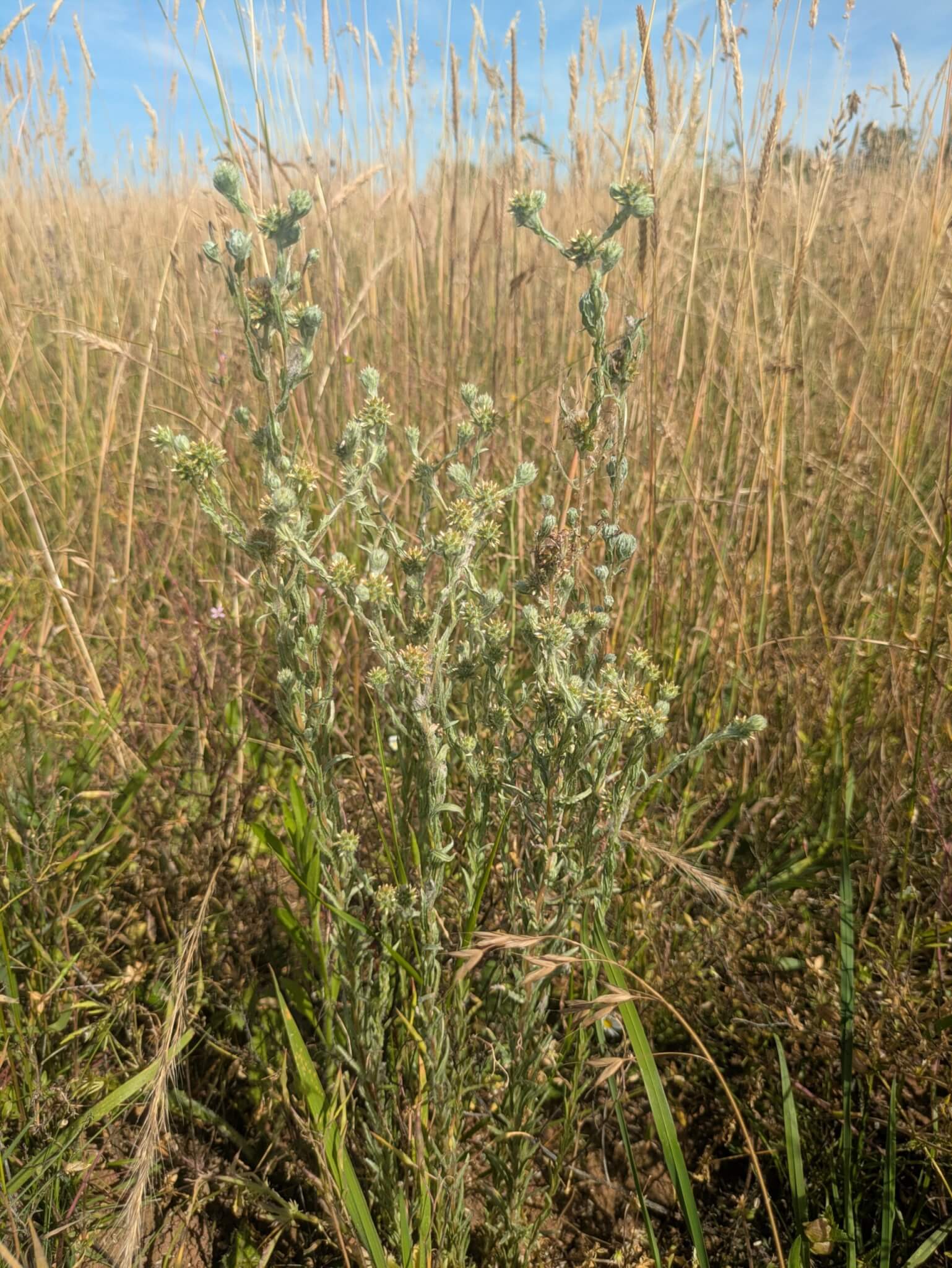
What we discovered in this first year is two habitats for the price of one – a colourful arable weed flora stirred up from the site’s seedbank: Poppies, the Field Pansies, the Mayweeds and the Wild radish (by now almost lost in the varied sward), plus many of the meadow species from Folly Farm. Among these, Common Bird’s-foot trefoil, Red Clover, Meadow Buttercup and the fine grass Crested Dog’s-tail, each a stalwart of neutral grassland, have all established well. Our richest sample had 28 species in a single square metre. We also encountered an unexpected bonus: around 150 plants of Common Cudweed had appeared. This plant is now scarce in Somerset. It was last recorded from the Wraxall area over 100 years ago and has reemerged from the seedbank after all that time. Amazing!
All in all, it’s a very pleasing start and we are greatly looking forward to following the ongoing story of these new meadows.
Written by Clare Mockridge, Volunteer Botanical Species Lead at Belmont
